
Five of the best tips to grow your small business’s social media presence.
Perfect if you do not have a dedicated social media specialist
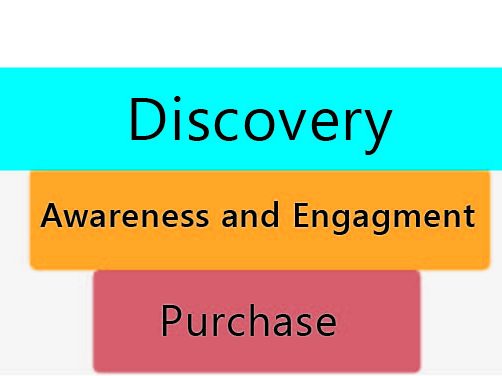
The customer will use social media as part of their research process before purchasing. Social media content contributes to the discovery and engagement stage.
An important point to remember is that every customer will be at a different marketing funnel stage. In addition, many customers could be anywhere along the consumer decision-making journey at one time. Therefore, brands should be prepared to have content ready to support each stage of the marketing funnel present on the social account to help support the funnel.
Customers who may not have seen the brand before may need content that introduces the customer to the brand. Content that clarifies the USP of the business, for instance. Introductory content works well for the discovery stage of the marketing funnel.
Awareness and engagement content goes a level deeper than discovery level content. For example, when the customer has some familiarity with the brand. Content that raises awareness and engagement will look like conversations starters, specific messaging and focusing on news and updates – comms.
The purchases stage could include product reviews and product demonstrations. Content for the customer to match this point would have the potential of converting customers.
Tip two: Create a social media spreadsheet.
Begin with implementing a basic social media tracker for analysis into content planning.
Add columns from this blog post. Columns stating the intention of the posts. Such as what part of the marketing funnel does the post target. There could also be columns for the platforms used for the post.
Building a spreadsheet from here can provide tracking of the posts and highlight what needs to be picked up next for the social media page to push.
Something else which could be on a spreadsheet is a traffic light system. To identify areas of business that need more development through social media.
Below is an example of a traffic light system approach to make social media work for a business.
Content planning stems from the analysis. A traffic light system can carry out analysis and help to plan content.
Let’s say that’s a service that is not getting enough interest, as you would assume.
To ensure the company is performing well in general. There are KPIs and objectives set across all the services within the business. As a way of telling if this service is hitting targets.
A KPI traffic light system would show if services need promoting or an increase in social media awareness.
A green, amber or red warning system works to identify services that are not getting enough interest.
Services falling into this category need to be prioritised and pushed on social. Produce content to enable the service to gain attention on social media. Such as content to increase awareness or conversion.
In this example, this service had a KPI of 50 enquiries a month.
So, for this KPI, being 50% from hitting the target would be 25 enquires per month.
The traffic light system:
Red – 25 to 35 per month.
Amber – 36 to 49 per month
Green – 50 + per month.
When enquiries rise or fall, the content will react to boost enquiries or maintain them. Using a traffic light system and KPIs to plan content gives social content an active role with the business.
Frequency is how often the page publishes posts—exploring if the page posting frequency post help the business with higher or lower frequencies. Asking the question frequency is a good idea because this may affect the size of the social media outlay in general.
Scheduling is working out and exploring the days and times that work best for impressions and engagement of posts.
Other ideas could be testing different styles of copy and imagery for comparison.
Tip three: Imagery is vital!
Get the right imagery. People communicate verbally but also communicate through mental imagery. Playing on imagination can benefit communication.
On a social media level, the image is essential in setting the account’s branding and message.
Tip four – Distribution
Do not forget about distribution. Social media posts are lifelong assets, and they hang around. So every post counts, even if not getting the attention it might deserve.
Many businesses face the challenge of getting radio silence from their post, which can be discouraging.
It is not the case that distributing content is necessary only when content is struggling to make an impact. Even better performing social media accounts need distribution tactics to help grow even more.
Leaving a post to sit on Instagram on an account with little engagement is ok. But the posts does not have the chance to grow. So doing nothing once the post is up is not enough.
Think about the list below to improve the reach and distribution.
1. Add this news to the bottom of the email (an informal email!)
2. Tell colleagues about (if possible, ask to share the post)
3. Tell friends and family (if possible, ask to share the post)
4. Pinn the content to the top feeds
5. Add posts to stories
6. Tag any relevant people and hashtags
7. Use links to a website or anything else relevant
8. Repurposed content in the future.
9. Refer to posts in future articles.
Once the content is created, it does not stop there. Particularly in the early stages of growing a digital presence. The more actions you can take around social media distribution, the better.
Tip five: Review progress and record any recommendations.
The performance of social media posts is crucial, and we have touched on this already. If you can regularly migrate, you are in-app analytics to a spreadsheet. Do this overtime to keep your version of the analysis.
Write down the reasons for the peaks and troths and other explanations for the data. Then, place your analysis, such as graphs and tables of the data from the spreadsheet.
Find recommendations over time that will benefit the business and note these down.
Good or bad, the recommendations help identify what kind of impact your social media has. Understanding how well the social media pages performs is essential to consider for the future.
Learning what works well and having a better understanding of how to make improvements is essential. These are levels of the knowledge you need to have if running a page by yourself. By using this information, you now have the opportunity to succeed in managing social media in the future.

 Robert Fogarty