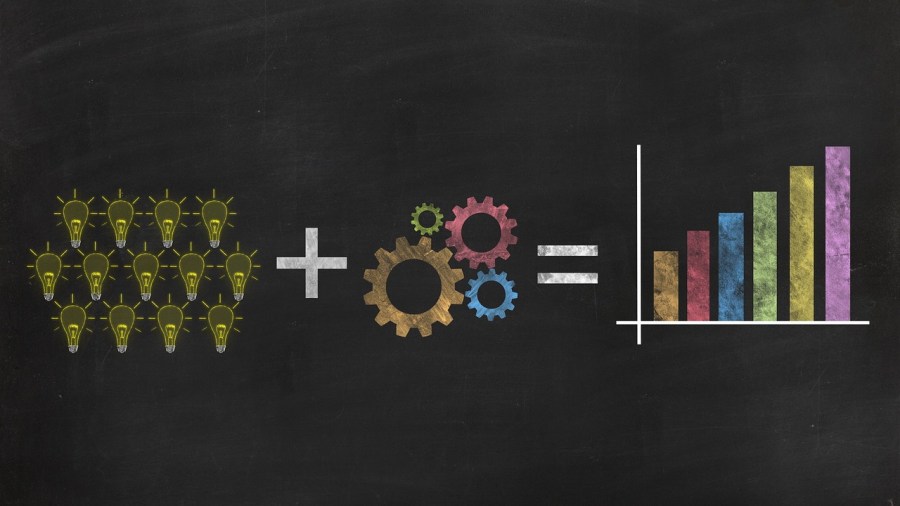
Conversion rate optimisation (CRO) is a blend between creativity and analytics. A form of experimentation that is prevalent in the website world. CRO is practised on websites and in other areas of digital marketing. However, there is enormous room for improvement for a digital marketeer to achieve with CRO within websites.
As websites are the backbone of a brand’s digital channels. Websites start as a black canvas, and design preferences are endless. Websites are vital touch points for brands with so much flexibility CRO works very on websites due to the freedom the marketeer has to experiment.
Conversions, for example, one-time purchases, and at the other end of the scale, customer sign-ups for emails, all help the brand grow. Relatively, more conversion means more success for the brand. Optimising for big or small conversions is the benefit of CRO.
Experimentation to optimise click-through rate, shopping basket value, or basket abandonment is especially important to a brand’s commercial success. These are critical metrics for a website that underpin its success commercially. CRO can also assist in picking up the little wins along the customer journey with CRO. Contributing positively to the website’s overall success. CRO experiments can take on most not all areas of the website.
Conversions through a website need measurement to test for success. In its most simple form, if a website gets 1000 visitors every day, and 10% are completing a conversion per day, the conversion rate for the particular webpage would equal 1%.
A standard website conversion rate, on average, can range between 2-4%. A rule of thumb is around 5-10% is commonly found throughout various sectors and industries. Website conversion rates can vary because of shifting dynamics that affect all companies from sector to sector.
CRO is not improving the design. CRO’s primary purpose is to experiment with ideas and develop evidence-based decision making. The CRO experiments form evidence-based reasoning for why elements, imagery and text are used on the webpage. The experiments have suggested that a certain element has increased the website users’ likelihood of converting in the desired way.
One prevalent method of CRO on a website is A/B testing. Typically, A/B means comparing or experimenting for example, with colours or images on the landing page or any other page. To test for example, if the CTA buttons respond better with a darker or lighter shade. Another example could be trying if a heart-warming photo is responded to better than the current. A/B experiment is a way of data sourcing that contributes to deciding the website’s layout based on evidence gathered from the A/B to optimise the website.
Central to A/B testing is creating a hypothesis for an idea that could improve conversion. Hypothesis tests in the context of the website will test parts of the website such as colours, persuasive copy, and imagery. Continuing to try new ideas on the website means upping the conversion rate over time for a website.
The hypothesis testing also covers in-depth aspects of website analytics and user testing. Heat maps plugin can confirm if other areas like paid search are working with web page design. Not just with small changes to button text or colours but if other digital channels or working for the site and can be tested in A/B hypothesised tests.
CRO and A/B tests can be hypnotised in more website areas with sales funnel tools, contact form analytics tools, etc. Other website features such as pop-up surveys and pop-up cards affect customer experiences and, therefore, responses to the website. Many aspects of the website can have A/B for website optimisation. Websites are a blank canvas for opportunities to be optimised.
Overview of software workflow.
Popular website optimisation software Google Optimizely and VWO (Visual Website Optimisation)
Create hypotheses. Current A vs B New idea based on persuasion marketing, images, and colours.
Steps
- Create multiple versions and test in real-time. Hypothesis A: The current element/colour/image Hypothesis B: New idea to test.
- Randomly assign visitors to the version of the experiment.
Splitting the traffic, A/ B test. Or in-depth methods such as demographics.
- Compare response rates.
Identify the positives or gain insights into the A/B test results.
- Implement the best performances. Hypotheses A or Version B as evidence for improving conversion for the website?
Plan and make changes to the website if changes are time, support, or resource-dependent.
- Then move on to the next A/B test to continually improve the website.
At the starter level of CRO understanding, the basics can help improve the website for conversion. The website is an asset and the backbone of the brand’s digital presence, and it is incredibly important for the website to convert customers. Getting ahead of the competition as well as another reason to continually experiment with CRO for evidence-based ideas and decision making to improve conversion to get ahead of rivals. CRO is used everywhere and has many benefits if understood and used to its full potential.

 Robert Fogarty